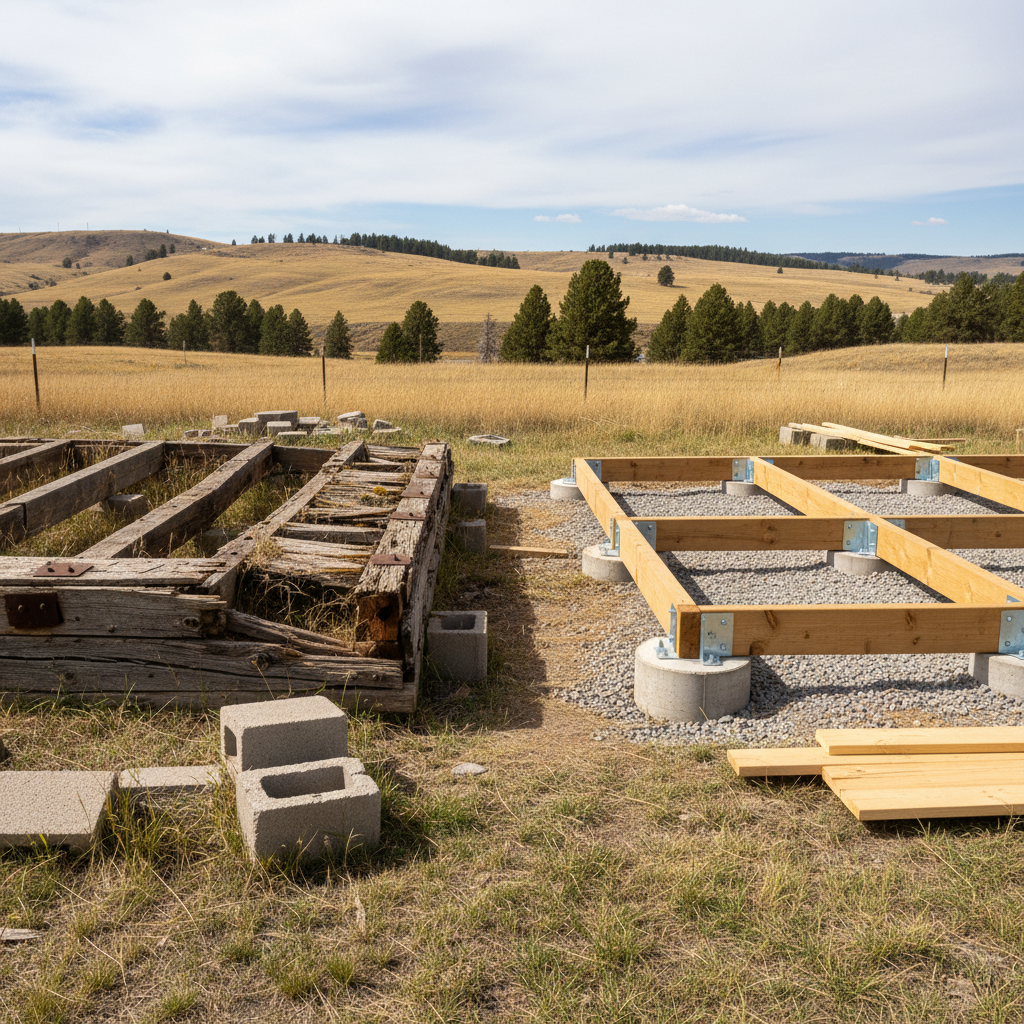
Alright, let's talk shed foundations. You're putting in a new shed, maybe a storage unit, a workshop, or even a small cabin out back, and you're wondering what to put it on. I see this question come up all the time, and honestly, there are two main contenders for most folks in Great Falls: a poured concrete slab or a well-built gravel pad. Both have their place, but one is usually a better fit depending on what you're doing.
Concrete Slab: The Heavy-Duty Option
When you hear 'concrete slab,' think permanence. This is essentially a mini-version of a house foundation. We're talking about digging down, laying a gravel base, putting down rebar or mesh for reinforcement, and then pouring concrete. It's solid, it's level, and it's not going anywhere.
The Good Stuff:
- Durability: This is king here. A concrete slab will last for decades, no question. It's impervious to rot, insects, and most ground movement.
- Strength: If you're storing heavy equipment, a tractor, a classic car, or anything with serious weight, a concrete slab is what you want. It distributes weight evenly and can handle a lot of stress.
- Floor: The slab itself becomes your shed floor. You can seal it, paint it, or even put down flooring directly on it. It's clean and easy to maintain.
- Security: A shed bolted to a concrete slab is much harder to move or break into.
The Not-So-Good Stuff:
- Cost: This is usually the biggest hurdle. Concrete work involves materials, labor for excavation, forming, pouring, and finishing. It's significantly more expensive upfront than a gravel pad.
- Time: There's prep work, pouring, and then cure time. You can't just slap a shed on it the next day.
- Permanence: Once it's there, it's there. If you ever want to move your shed or change its footprint, removing a concrete slab is a major undertaking and expense.
Gravel Pad (with Skids): The Flexible Choice
Now, a gravel pad, especially when paired with pressure-treated skids under your shed, is a different beast. This is a common setup for smaller to medium-sized sheds, and it's what we often recommend at Custom Sheds Great Falls for many of our builds. It involves excavating a shallow area, laying down a weed barrier, and then filling it with compacted gravel, usually 3/4